
HOLISTICSERVISEGROUP
The second book in the Energy Psychology
The second book in the EnergyPsychology series by Doctor of Philosophy and Psychology, Professor Alexander Vekshinsky, «Fundamentals of Knowledge of the Subtle World,» is devoted to the practical aspects of developing spiritual-energetic intelligence (SEnQ) Read more…
Psychobionic
In the evolving landscape of organizational science, a novel interdisciplinary field, psychobionics, emerges as a transformative paradigm, bridging psychology, management, and organizational design. Psychobionics investigates the profound influence Read more…
Energy Psychology – a Methodological Basis for the Development of Spiritual-Energetic Qualification (SEnQ)
Energetic psychology is an interdisciplinary concept that can be considered in three key aspects:
Within the framework of scientific psychology Read more…
About us
«International Association of Holistology and Holistotherapy»
The public movement «International Association of Holistology and Holistotherapy» aims to unite the efforts of people who take responsibility for the formation, development and approval of a new paradigm of human health. The basis of this paradigm is a holistic approach to medical and health-improving practice, which involves the unity and harmonious combination of spiritual practices, psychophysiological and socio-behavioral health prevention and treatment.
By uniting scientists, specialists and all participants in the interaction aimed at forming a new community of people who possess all the components of health: physical, personal and spiritual, the «International Association of Holistology and Holistotherapy» strives to make knowledge about the basics and true nature of health the property of all people who take responsibility for their health, the health of their loved ones and all of humanity. In this regard, the International Association of Holistology and Holistotherapy sets the following main goals:
• organizing the propaganda of holistic approaches to human health and wellness practices and turning them into a sustainable worldview of people ensuring their physical, socio-psychological and spiritual development;
• organizing research and methodological work in the field of holistic health activities in the direction of fundamental and applied research by attracting the most advanced representatives of world science to the activities of the association and forming a new scientific elite capable of giving humanity a set of effective tools to ensure its healthy and happy existence;
• creating and developing a multi-level network of educational centers (universities, schools, courses) for training specialists in the field of holistic health activities, making knowledge in the field of holistology and holistotherapy available, as well as the possibility of their practical application to a wide range of people.

Important to understand
Scientific ideas, new approaches, directions of understanding

Laws of interaction between the subtle and material worlds
The projection of the subtle world onto the material world occurs according to certain laws that regulate this process.
In philosophical teachings and esoteric traditions, fundamental laws are considered that describe the interaction between the subtle and material worlds. Among them are the Law of Vibration, the Law of Correspondence, and the Law of Attraction.
The Law of Vibration states that everything in existence is in constant motion and has a certain vibration frequency. The higher the level of being, the higher the frequency of these vibrations. In order for energy from the subtle world to manifest in the material, it must lower its frequency. As William Walker Atkinson wrote: «When we think, we send out vibrations of a subtle ethereal substance that are as real as the vibrations that manifest through light, heat, electricity, and magnetism.»
The Law of Correspondence states that energy from the subtle world manifests in the material world in accordance with its laws. This means that a person’s internal states and thoughts are reflected in external reality. For example, a thought about love can manifest itself as a good deed, and a thought about fear — as an illness. This principle reflects the ancient wisdom: «As above, so below; as within, so without.» It emphasizes the relationship between a person’s inner world and the external circumstances of his life.
The law of attraction states that like attracts like. Energy from the subtle world attracts corresponding events and circumstances in the material world. Positive thoughts attract positive events, and negative thoughts — negative. Atkinson wrote: «Our thoughts not only influence us and others, but also have the power of attraction. They attract other people’s thoughts, life circumstances, people, things to us.»
The projection of the subtle world onto the material world occurs through several stages. At the mental level, a thought or idea arises that has a certain energy and information. This thought, according to the Law of Vibration, begins to radiate corresponding vibrations, attracting similar energies and events into a person’s life. Thus, internal states and beliefs form external reality, confirming the relationship between the subtle and material worlds. Understanding and applying these laws allows a person to consciously influence their life, harmonizing the inner world and, as a result, improving external circumstances. As Atkinson noted: «Bright, cheerful and happy thoughts attract bright, cheerful and happy things and events to us.»

Physical-energetic level of SEnQ development
The physical-energetic level is the foundation of the spiritual-energetic qualification (SEnQ) development system. It serves as the basis for harmonious interaction with oneself and how it accumulates and is spent. This includes awareness of energy centers (chakras) and their state.
1. Energy flows. The ability to sense and track the movement of energy in the body, its blockages or imbalances.
2. Energy sensitivity. Developing the skill of feeling energy not only in oneself, but also in the surrounding space, in other people and nature.
3. Managing energy states. Energy regulation, the ability to restore and maintain energy balance, especially in stressful situations or under emotional overload.
4. Directing energy. The ability to consciously direct energy to achieve goals, healing or harmonization.
5. Protection from negative influences. Mastering techniques that help protect your energy from external negative influences.
6. Harmonization of the body through breathing practices. Using breathing to regulate energy flows, relieve stress and increase energy levels.
7. Movement and body practices. Yoga, qigong, tai chi and other methods that help open energy channels, strengthen the body and improve energy circulation.
8. Meditation. Practices aimed at calming the mind, concentrating and tuning into internal energy processes.
9. Working with chakras. Awareness and balancing of energy centers, which contributes to the harmonization of the physical, emotional and spiritual state.
10. Energy hygiene. Energy cleansing: Regular practices to cleanse the energy field of negative influences, stress and blocks.
11. Grounding. The ability to remain «here and now», strengthening the connection with the earth and physical reality, which helps to avoid energy imbalance.
12. Integration with other levels. The ability to replenish other levels with energy.
The physical-energetic level serves as the basis for work on the psycho-emotional and spiritual levels. Without energy harmonization, it is impossible to effectively work with emotions, unconscious processes or deep spiritual aspects, since imbalance in the energy centers can manifest itself as emotional instability or lack of clarity in understanding one’s spiritual goals.

Fundamentals of a philosophical view of the Laws of the Universe
The laws of philosophy reflect the Universal Laws of the Universe — these are not just abstract principles, like mathematical formulas. They are alive and active. In the context of spiritual philosophy, holistics, esotericism and energy psychology, they can be considered simultaneously as a manifestation of the Higher Mind, present in the very structure of the universe. It is as if the energy of the Higher Source «condenses» into the form of a pattern that we can observe. These laws are the imprint of the highest will, the highest wisdom, just as a light beam already contains the entire spectrum of color, but it is revealed through a prism. For example, the Law of Attraction (in physics or psychology) is a manifestation of a deep desire for Unity, for connection. This is already energy, formed into a pattern.
On the other hand, each Law is a wave process, energy of a certain frequency. The Law, in essence, is inseparable from vibration, it is vibration. And vibration is the movement of energy. Therefore, we can say: Law is the form of existence of the Highest Energy.
Universal laws are both the manifestation and the energy of the Highest. They carry within themselves both structure and movement and purpose.
This understanding gives us not only philosophical clarity, but also a practical basis: if we integrate into these laws, we integrate into the flow of life itself, into the flow of God. This is the path to healing, growth, harmony.
Modern scientific thinking increasingly intersects with esoteric philosophy, especially when it comes to the laws of nature — those universal principles that govern energies, matter and life.
The study of universal laws and the forms of their manifestation is not a tribute to tradition or dogma, but a way to form an effective worldview.
The laws of physics, biology, chemistry are manifestations of more general patterns that operate at all levels of existence: from the microworld to the macrocosm. Principles such as cyclicity, rhythm, unity and struggle of opposites, cause and effect, resonance and conservation of energy are not just abstractions, they are a reflection of the deep structures of the Universe itself.
Laws should not be viewed as external limitations, but as structured energy. They determine how and in what order energy unfolds into matter, how processes are formed, how growth, restoration, destruction and adaptation occur.
For example, the law of attraction is not only the mechanics of gravity, but also a symbolic expression of the desire for integrity, for unification. And the law of feedback — the basis of cybernetics, biology and psychology — demonstrates how the system self-adjusts and maintains balance.
From a philosophical point of view, a law is a manifestation of orderliness, rationality and predictability. It is something that exists independently of our will, but which we can know, use and interact with.
The higher the level of organization of matter, the more complex the laws that regulate it. The law that governs the cell differs from the law that governs consciousness. But the principle remains: everything in the world is subject to regularity. And the knowledge of these regularities is the path of development.
Man, as part of nature and as a microcosm, is also subject to these laws. We see their manifestation in physiology, psyche, energy, and even in social and ethical models. Violation of these laws manifests itself in the form of disharmony, illness, suffering. Compliance is in the form of health, growth and internal stability.
Integration into the law is a development strategy, not submission. Instead of fighting the natural order, a person can integrate into it. And then the Law becomes not an obstacle, but the wind filling the sails. It does not suppress, but develops, does not limit, but shows the way.
This awareness allows you to form a holistic worldview, energetic awareness and a strategy for internal growth, a practice in which a person acts in synchrony with nature and himself, developing his spiritual and energetic qualification.
The law is not an external force. This is the inner structure of existence itself. This is the language in which the Universe speaks to us. Understanding it is the key to conscious living, to healing, to development.
2025 — 80 years since the death of V.I. Vernadsky
Vladimir Ivanovich Vernadsky (February 28 [March 12], 1863, St. Petersburg, Russian Empire — January 6, 1945, Moscow, USSR) — Russian, Ukrainian and Soviet scientist, naturalist, thinker and public figure.
Academician of the Imperial St. Petersburg Academy of Sciences (1912). Actual State Councilor (1911). One of the founders and the first president of the Ukrainian Academy of Sciences (1918-1921). Creator of scientific schools (mineralogy, geochemistry) and the science of biogeochemistry. His scientific interests included: mineralogy, crystallography, geochemistry, geology, soil science, radiogeology, biology, paleontology, biogeochemistry, meteoritics, philosophy and history of science. In addition, he was engaged in organizational and social activities.
Vernadsky is the greatest thinker and the most prominent representative of Russian cosmism.
Vladimir Ivanovich Vernadsky, an outstanding Russian scientist, made a significant contribution to the development of this idea through his concept of the noosphere. The term «noosphere» comes from the Greek «noos» — mind and «sphere» — shell, and denotes the sphere of mind, which is a stage in the evolution of the biosphere, at which human activity becomes the dominant factor determining the development of the planet.
Vernadsky developed his concept under the influence of the works of French thinkers Edouard Leroy and Pierre Teilhard de Chardin, but gave it a scientific basis, relying on his own research in the field of biogeochemistry. He studied the interaction of living organisms with the geological environment, which allowed him to formulate a holistic view of the biosphere as a self-regulating system evolving under the influence of living matter.
With the advent of man and the development of his intellectual abilities, the biosphere began to transform into the noosphere. Vernadsky argued that humanity, in the process of its development, is turning into a new powerful «geological force» capable of transforming the appearance of the planet with its mind and labor. At this stage, the human mind and scientific thought become the main driving forces determining the further evolution of the Earth. Science, according to Vernadsky, provides man with tools for consciously managing natural processes, which emphasizes the responsibility of mankind for the preservation and development of the biosphere.
As part of his concept, Vernadsky identified several key signs of the transition of the biosphere to the noosphere. Among them are the settlement of the entire planet by man, the improvement of communications and information exchange, the discovery of new energy sources such as atomic energy, the growth of mass democracy and the strengthening of the role of scientific thought as the main factor in progress. These changes indicate the increasing influence of the human mind on natural processes and the need for harmonious coexistence with the environment.
The philosophical significance of the concept of the noosphere lies in emphasizing the value of the human mind and its role in the evolution of the planet. Vernadsky warned of the need for a responsible attitude to nature, which became the basis for modern environmental ethics. His ideas combine scientific and philosophical approaches to understanding man’s place in the world, emphasizing the unity of nature and humanity.
Our Authors
Book series «Energy Psychology»
Alexander Vekshinsky (born 1960)
Rector of the International Open University of Holistology, President of the Association of Holistology and Holistotherapy, Head of the author’s School of Self-Development.
Studied at higher educational institutions in economics and sociology (specialist, LFEI, 1983), psychology (master’s degree, St. Petersburg State University, Faculty of Psychology, 1993), philosophy (doctoral studies, IUFS, 2004), medicine (advanced training in homeopathy, St. Petersburg Academy of Pediatric, 2008)
Received additional training in Management at the Menedgerial Grid School (USA, 1990), ontopsychology at the School of Psychological Counseling Associazione Ontopsicologica Antonio Meneghetti (Italy, 1992), yoga, Vedic sciences, philosophy and medicine at the Dev Sanskriti Vishwavidyalaya University (DSVV) at the Shantikunj Ashram (India, 2008) and more than 50 methodological trainings on coaching, psychological counseling, homeopathy, oriental health and spiritual practices, Buddhist philosophy, Feng Shui, astrology and healing.
Professor, Doctor of Psychology (PhD, 2005), Grand Doctor of Philosophy (GPhD, 2007), scientist with a wide range of interests in various areas of philosophy, psychology, management, pedagogy, sociology, medicine, esotericism.
Author and co-author of more than 20 monographs and 180 scientific, scientific-methodical articles, and educational programs, organizer of a number of international conferences on holistic medicine. Having more than 40 years of experience in scientific and pedagogical work in the largest universities of St. Petersburg in the field of psychology, philosophy, management, he prepared and trained as a scientific supervisor several dozen scientists in the specialty of Economics, Psychology, Medicine, hundreds of practitioners, bachelors, masters, postgraduates, doctoral students and created dozens of original methods, courses and trainings on personal growth, personally conducted more than 2000 trainings and meditative practices for the development of spiritual-energetic qualification (SEnQ) Since 2017, he has been living in Israel, conducting research work in the field of psychology and esotericism, and also conducts advisory reception, conducts group and individual classes in Germany, Bulgaria and Slovakia.
Study programs
The training of holistic therapists requires each student to undergo, first of all, the stage of personal, spiritual and physical recovery. During the first year of training, each student experiences the techniques and methods that will become his tool in working with his clients.
The first year is entirely devoted, along with the study of general philosophical aspects of the healing process, primarily to self-healing: self-study, development of reflection, participation in psychotherapeutic sessions (individual and group), development of physical abilities, bringing the body, personality and soul into harmony.
A holistic therapist must be an example of health, a healthy lifestyle and personal maturity. His main tool is himself. The work of a holistic therapist is service, it does not allow following power complexes, a paternalistic view of the patient, does not allow self-affirmation on the patient. A holistic therapist is a healer-coordinator who helps the patient to build a self-healing line that would optimally meet all his/her characteristics, and not be limited only to the capabilities of the therapist. One of the principles of the holistic therapist’s work is interaction with colleagues, a consultation approach to diagnostics and patient management.
The basis of the educational process is:
• a combination of an individual approach to each student based on providing him with high-quality material for independent preparation;
• ensuring a system for completing all types of practice, allowing the implementation of theoretical knowledge and practical skills;
• involvement of the teaching staff in research and scientific-practical work;
• reliance of facilitating pedagogical material on the real experience of their own medical and health practice;
• impartiality of control over the acquisition of the necessary range of knowledge, skills and abilities, ensuring professional effectiveness based on a competency-based approach.
«HOMEOPATHY»
Main sections and topics of classes in the 1st level program (1-2 courses) for training holistologists-holistotherapists with the specialization «HOMEOPATHY» (1248 hours)
Basic principles of holistology and holistotherapy (32 hours)
1.1. Comparison of the basic principles of holistic healing activity and official medicine.
1.2. Homeopathy and holistotherapy.
1.3. The place of homeopathy in the hierarchy of the complex of healing methods and means.
1.4. Esoteric foundations of homeopathy.
The place of homeopathy in the system of holistotherapy (32 hours)
2.1. The concept of disease and health in holistic healing activity.
2.2. The energy structure of a person.
2.3. The holistic approach in homeopathy.
2.4. Philosophy of homeopathy, basic laws, fundamental concepts.
Fundamentals of classical homeopathy (384 hours)
3.1. History of the formation and development of homeopathy in Russia and in the world. The position of homeopathy in the world and in Russia.
3.2. «Organon of the medical art» by S. Hahnemann. Homeopathic concept of diseases. The concept of vital force. Fundamental principles of homeopathy. The law of similars.
3.3. Dosage rule (potency). Methods of preparing homeopathic preparations. Posology of homeopathic preparations. Proving — testing of preparations and studying their dynamic action.
3.4. Features of taking a homeopathic case, collecting a homeopathic anamnesis. Pathogenesis of Ars, Lyc
3.5. Repertories, Materia Medica. Homeopath’s Glossary. Pathogenesis of Phos, Thuj
3.6. Symptoms in homeopathy. Hierarchy, characteristics. Provisions of Hering’s law. Pathogenesis of Arn, Apis
3.7. The body’s reaction, directions of treatment, worsening, exacerbation, suppression. Progressive and regressive vicariance. Pathogenesis of Sul, Sepia.
3.8. Miasms, «kingdoms» and their main characteristics. Pathogenesis of Puls, Sil
3.9. Taking a case and managing a patient. Rules and algorithms for the initial and repeated prescription of a homeopathic remedy in various homeopathic schools. Pathogenesis of Nux.v., Calc.c
3.10. Polychrests, constitutional remedies, drainages. Pathogenesis of Ign, Natr.mur.
3.11. Practical methods of repertorization. Pathogenesis of Lah, Merc
3.12. Acute and chronic diseases. Pathogenesis of Acon, Bel,
Psychological foundations of interaction in the holistic healing process (128 hours)
4.1. Psychology and psychoenergetics of health. Psychological mechanism of self-healing.
4.2. Fundamentals of communication in medical practice. Methods of psychological protection of the patient and ways to overcome them. Obstacles to healing.
4.3. Perception and analysis of distortions of information coming from the patient.
4.4. Psychotherapeutic work of a holistic therapist with homeopathic prescription.
Clinical homeopathy (320 hours)
5.1. Infectious diseases. Pathogenesis of the main drugs used. Acon, Apis, Bell, Bapt, Echin, etc.
5.2. Neurology and psychiatry. Pathogenesis of the main drugs used. Mosh, Opium, Cicuta,
Passiflora, Coccul, etc.
5.3.Endocrinology. Allergology. Narcology. Pathogenesis of the main drugs used.
Insulin, Iris, Natr. Suph, Spongia, etc.
5.4.Genitourinary system. Sexual disorders. Pathogenesis of the main drugs used. Cant, Conium, Medor, Sabina, Staph, etc.
5.5.Musculoskeletal system. Traumatology. Varicose symptom complex. Pathogenesis of the main drugs used. Arn, Aescul, Abrot, Ac.fluor, Ac.nitr, etc.
5.6.Diseases of the cardiovascular and pulmonary systems. Pathogenesis of the main drugs used. Adren, Cact, Carb.veg, Naya, Tab, etc.
5.7.Gastrointestinal tract. Pathogenesis of the main drugs used. Antim.crud, Avena sat, China, Hydrast, Ipec, etc.
5.8.Skin, hair and nail diseases. Pathogenesis of the main drugs used. Alum, Graph, Kreos, Mezer, Petrol, etc.
5.9.Otolaryngology, ophthalmology. Pathogenesis of the main drugs used. Allium cepa, Dulc, Phytol, Samb, Teucr, etc.
5.10.Pediatrics and pregnancy support. Pathogenesis of the main drugs used. Arist, Cauloph, Glon, Secal.cor, Medusa, etc.
6.Main directions of development of classical homeopathy (128 hours)
6.1.Main schools of homeopathy.
6.2.R.Shankaran’s method.
6.3.Homeopathic table of J. Scholten.
6.4.J.Vithoulkas’s school.
6.7. Educational and introductory practice (224 hours)
The main sections of the 2nd level program (2-3 years) for training holistologists-holistotherapists with the specialization «HOMEOPATHY» (960 hours)
Psychological foundations of personal and spiritual growth of a holistotherapist specialist (32 hours)
Working with the patient’s subtle bodies in the holistological treatment process (32 hours)
Development of classical homeopathy in the world’s leading scientific and practical schools (384 hours)
Combination of health practices and homeopathic prescriptions (192 hours)
Complex of health practices in holistic health and wellness work (96 hours)
Treatment and consulting practice (224 hours)
Brief summary of the doctoral training course.
Psychological foundations of management and business communications.
What is meant by people management in the process of joint activities. Definition of management. The beginnings of management activity in tribal families. The emergence of management. The issue of the primacy of subordination and management. Awareness of management. Motivation for managerial practice. Management in the process of education. Management in the process of joint work. The emergence of the division of labor. The emergence and awareness of incentives and motives for management. Manifestation of the main properties of organizational management. The influence of archaic models on modern business communications.
Deep models of business communications.
Manifestation of deep models in the laws of management. Contradictions and correspondences of management practice, deep models.
Psychobionic approach to the development of business processes.
Definition of psychobionics. Psychobionics tools. Application boundaries. Examples of use and ignoring.
Features of the formation of management structures in various ethnocultural environments.
Features of subconscious models of business communications depending on the ethnocultural characteristics of the region. Psychobionics as a tool for research and formation of effective organizational structures.
Specifics of the application of management tools depending on the national and religious traditions of business communications participants.
Features of the deep perception of management impact depending on the level of religiosity of employees. The structure of values, personnel, as a basis for the formation of management tools.
Individual and group subconscious models of business communications.
Research and comparison of individual models of business communications at the enterprise. Search for contradictions. Finding group models.
Methods of research and correction of internal psychological models of business communications.
Method «Management structure — family structure». Method of structured interview using specific orders, instructions, business letters as stimulus material.
Coordination of psychobionic communication models arising from different environments.
Method of translation of motivation matrix in development of management decisions for foreign cultural environments. Organization of monitoring of accuracy of translation of motivation matrix.
Dependence of mission and development strategy of the enterprise on features of ethnocultural environment.
Deep understanding of mission. Origins of mission. Energy egregors as sources of missionary transactions. Egregorial levels. Refraction of mission in its translation into foreign cultural environment. Materialization of mission in psychological complexes. Methods of mission research. Connection of mission and development strategy of the enterprise.



Announcements
Here are published the requests of scientific supervisors for recruitment to special courses for doctoral students
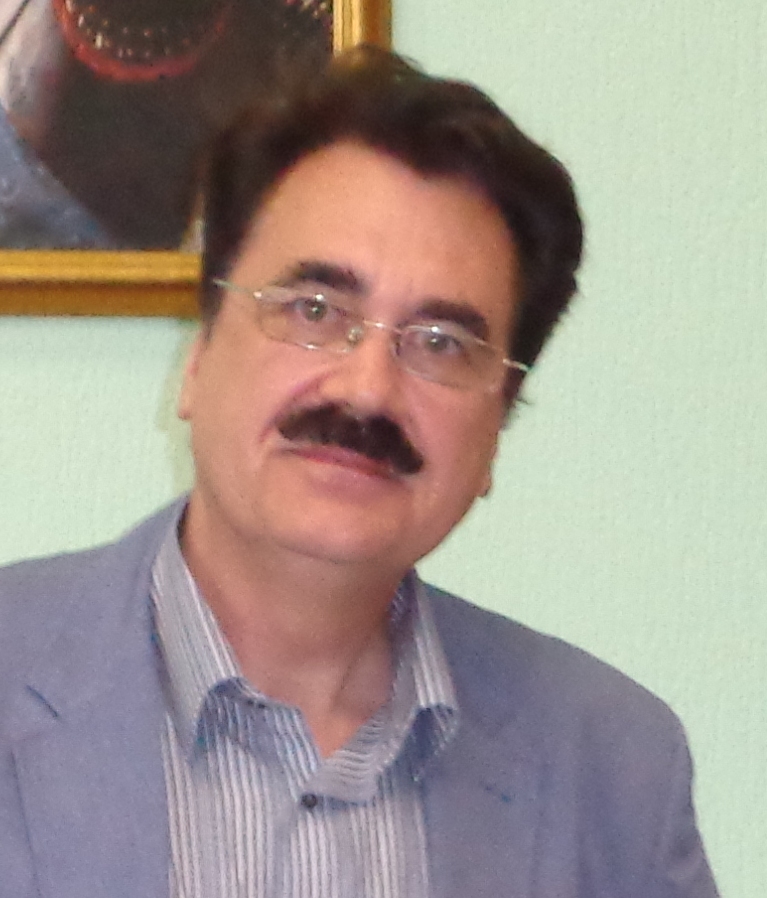
I invite doctoral students for research and writing dissertations in the field of holistic philosophy
Proff.Vekshinsky
I will consult doctoral students who are researching the problem of restoring neural connections after injuries.
Doc. John Denver

I invite osteopathic specialists to co-author a collective monograph.
PhD, Michelle Smith

What are you waiting for?
Ready to take the next step? Let’s bring your vision to life! Explore our services and get in touch today for a consultation. Together, we’ll make it happen.
Our team
We are always open to cooperation with those who support the ideas of peace, spirituality and progress.


Financial Analys

Our work in numbers
Lorem ipsum dolor sit amet, at mei dolore tritani repudiandae. In his nemore temporibus consequuntur, vim ad prima vivendum consetetur.
employees
+20
Members of the Association.
+1000
Graduates of short-term educational programs.
+2500
Total students for 2008-2024.
+200
Explore Our Blog
(Заголовок статьи)
Справочник практикующего врача гомеопатаСоставлен Беляевым Владимир ЛеонидовичемБез знаний нет[…]
Защищено: Справочные материалы
Отрывка нет, потому что запись защищена.
Hello world!
Welcome to WordPress. This is your first post. Edit[…]
Contact us
We will be glad to cooperate and answer all your questions as quickly as possible.
WhatsApp +491777525652 (SMS only)